
Iraq
Iraq criminalises same-sex sexual activity between men and between women. Possible sentences are unclear, but the death penalty has been imposed on LGBT people.
Last updated: 11 January 2026
Same-sex sexual activity is prohibited under the Penal Code 1960, which criminalises acts of ‘consensual sex’. This provision carries a maximum penalty of seven years’ imprisonment. Only men are criminalised under this law. In addition to potentially being captured by laws that criminalise same-sex activity, trans people were previously criminalised under Article 198 of the Penal Code, which prohibited the ‘imitation of the opposite sex’, however this law was found to be unconstitutional in 2022.
Kuwait was a British protectorate until its independence in 1961. The 1960 Penal Code, adopted just prior to formal independence, continues to be in operation today and criminalises same-sex sexual activity. According to the Constitution, Islamic law is the main source of legislation in Kuwait.
There is some evidence of the law criminalising same-sex sexual activity being enforced in recent years. There was substantial evidence of the law criminalising ‘imitation of the opposite sex’ being enforced prior to it being found unconstitutional in 2022. There have been some reports of discrimination being committed against LGBT people in recent years, and transgender people appear particularly vulnerable to abuse.
In February, Kuwait’s Constitutional Court overturned Article 198 of the Penal Code 1960 which since 2007 criminalised the ‘imitation of the opposite sex’, ruling it unconstitutional. The law had been used to criminalise trans people, including convictions as recently as 2021 (see below). The move was welcomed by human rights organisations, including Amnesty International which hailed the development as a “major breakthrough” for transgender rights in the Gulf Arab region.
In June, the Ministry of Commerce and Industry asked members of the public to report any displays or promotion of the ‘pride flag’ or other symbols of the LGBT community.
According to ILGA World, in October a proposal was made in parliament to expand the law to criminalise any form of LGBT advocacy, including displaying a rainbow flag, with a penalty of up to three years’ imprisonment and/or a fine.
The Communications Law was adopted in 2014 and includes a provision under Article 70 which criminalises sending ‘amoral pictures or video clips’. Although this does not specifically target LGBT people, case law has demonstrated that this statute is used in cases prosecuting transgender people for expressing their gender identity online (see below).
While Kuwait has ended the criminalisation of trans people, many more countries continue to use the law to marginalise people based on their gender identity or expression. We’ve reported on the extent and effects of the criminalisation of trans people.
Read moreIn September, the General Department of Criminal Investigation, represented by the Department for the Protection of Public Morals, arrested a number of individuals on charges of acts contrary to public morals and incitement to debauchery and immorality, and they were referred to the competent authorities to take legal measures against them. It is unclear how many people were arrested – local newspapers cited 71 or 31 individuals – and whether they were charged under Article 193 criminalising sex between men.
In October, a transgender Kuwaiti woman was sentenced to two years in prison for “imitating the opposite sex” under Article 198 of the 1960 Penal Code, along with Article 70 of the Communications Law. Human Rights Watch reported that she had been arrested five times before this conviction, and had posted videos online recounting her experiences of arrest, which included being verbally, physically, and sexually abused. Following her arrest in October, she was being held in a solitary cell in a male prison.
In April, it was reported that police arrested 41 people in a raid of a “homosexual massage parlour”.
A “moral” crackdown on the LGBT community was reported in August. Authorities deported 76 men and shut down 22 massage parlours that were suspected of being a hub for homosexual activity.
In September, a Polish Instagram celebrity was arrested in a Kuwaiti mall for looking “too feminine”. He was detained by the police, humiliated and beaten before being released and deported after two weeks of detention.
In May, 32 individuals were arrested for taking part in an alleged “gay party”. Similar mass arrests have been reported in previous years.
A Human Rights Watch report interviewing transgender individuals living in Kuwait suggested that Article 198 was often used to arbitrarily arrest transgender people, but that there were very few actual prosecutions.
Freedom House’s Freedom in the World report noted that societal and legal discrimination against LGBT people prevents them from playing any open role in political affairs.
The US Department of State report for Kuwait reported that “police incited, perpetrated, condoned, and tolerated violence against LGBTQI+ individuals. Transgender persons reported cases of repeated harassment, detention, abuse, and rape by police, who blackmailed and raped them without fear of reprisal.” Transgender people were especially vulnerable to discrimination, including in employment, education, and healthcare. No registered LGBT organisations existed, and no public events or pride marches were held.
In August, the Ministry of Information announced a ban on the film Barbie, saying it “promulgates ideas and beliefs that are alien to Kuwaiti society and public order”.
The US Department of State report for Kuwait reported that in June, the Ministry of Commerce and Industry published a list of flags and banners banned from public display, such as the rainbow flag and the progress flag, as part of a ban on LGBT expression in Kuwait, possibly in response to the law proposed in 2021 (see above).
Although the law against gender expression was repealed in February, the Kuwaiti newspaper Al-Rai quoted an official security report stating that approximately 3,000 “transvestites” had been deported since the beginning of the year. This is because of a loophole that allows residents to be deported on the basis of ‘protecting public morals’, even where no crime is committed.
In December, a domestic media report suggested there had been a “growing campaign of incitement against homosexuality and the LGBTQ community” in recent weeks. Billboards bearing anti-LGBT messaging had begun to appear on streets, and individuals perceived to be LGBT were being beaten in public. This campaign was initiated in June following diplomatic tensions with the US after its embassy in Kuwait published a tweet acknowledging pride month.
In October, the authorities banned the Indian movie, “5 Weddings”, because it featured Hijras.
Not strictly ‘discrimination’ so confirm whether you want to keep it. Same with the 2018 entry below, which was previously under an ‘other developments’ section. Think this is a holdover from the pre-2022 format so I’ve removed.
A report by Human Rights Watch documented significant societal discrimination and abuse of transgender women, including harassment, sexual assault, physical violence, and psychological abuse.
Iraq criminalises same-sex sexual activity between men and between women. Possible sentences are unclear, but the death penalty has been imposed on LGBT people.
Iran criminalises same-sex sexual activity between men and between women. Sentences include a maximum penalty of death.
Country profile of Saudi Arabia. LGBT people are Saudi Arabia criminalises same-sex sexual activity between men and between women. The gender expression of trans people is also criminalised. Sentences include a maximum penalty of death. under Sharia Law.
The country profiles on the Human Dignity Trust’s website are developed through a combination of in-house expertise and research, including monitoring media reports; sourcing reports from partners and stakeholders; and reviewing reports from governments and other human rights organisations.
We go to great lengths to ensure that, to the best of our knowledge, the information provided on our website is correct and up to date. If you believe that any information on our website is inaccurate, you may bring this to our attention by e-mailing [email protected].
Information on this website is provided for general use only and should not be relied on as a definitive position on the law as it applies at any given time. No liability can be accepted for any use of the information in this website and/or links from it.
Over 60 countries still criminalise LGBT people. Together, we can bring this number down. A donation today will help continue our vital support for LGBT people and governments seeking to change laws around the world.
Donate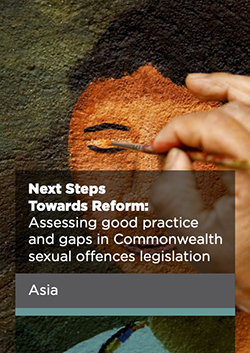
This report examines the status of sexual offences legislation in Commonwealth Asia, assessing good practice and identifying where there are gaps in protection, with a particular focus on women, children, LGBT+ people and people with disability.

Court of Criminal Appeal finds that consensual same-sex intimacy is a fundamental right and cannot be considered ‘unnatural.’

To mark LGBT History Month 2022, the Trust' new timeline chronicles the evolution of the criminalisation (and decriminalisation) of same-sex activity.
Join our newsletter to receive regular updates about decriminalisation efforts around the world, including breaking news on key legal cases, hot off the press reports, invitations to events and messages from our Chief Executive.