Last updated: 13 January 2026

Types of criminalisation

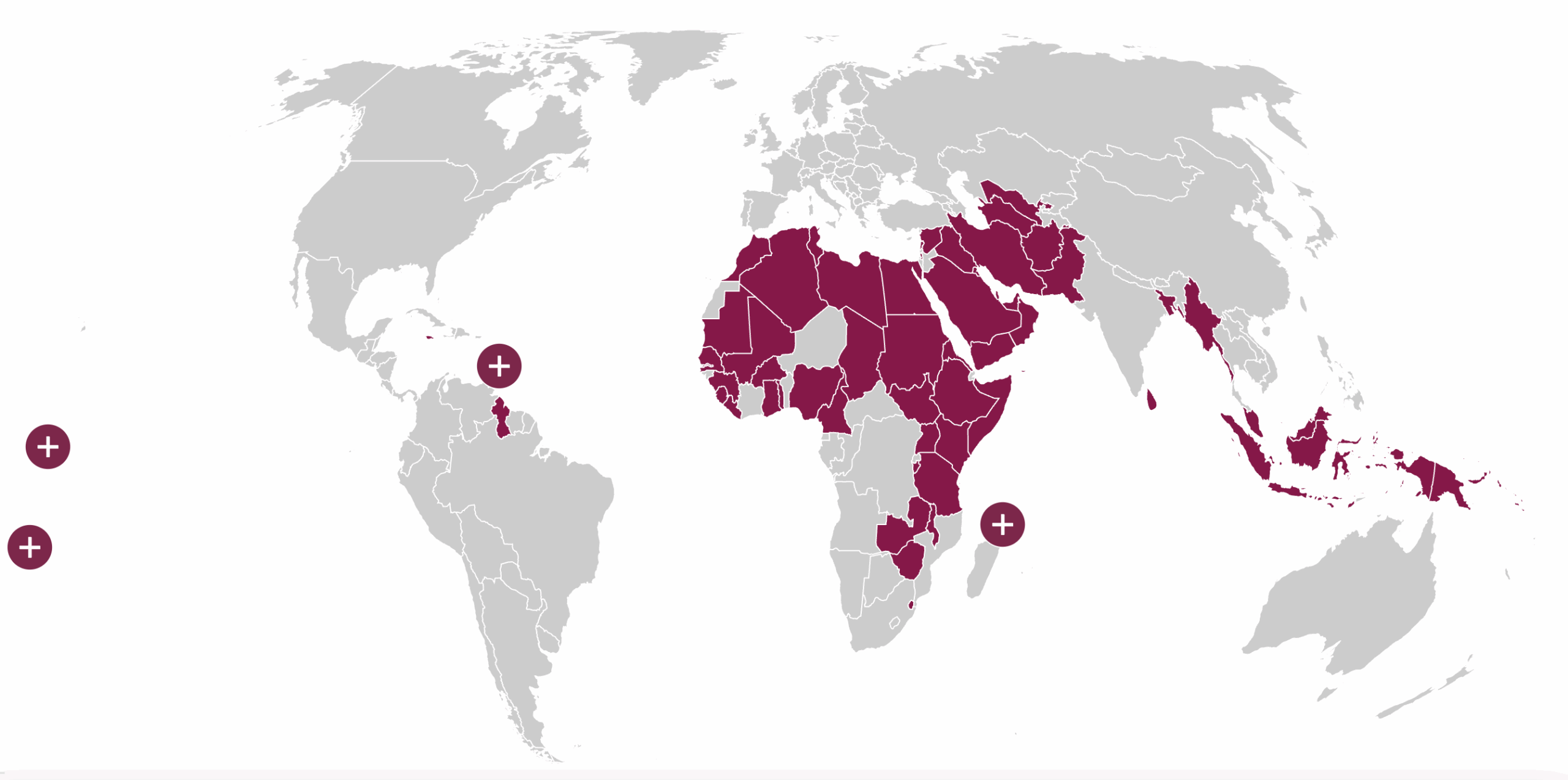
  • Criminalises LGBT people
  • Criminalises sexual activity between males
  • Criminalises sexual activity between females
  • Criminalises the gender expression of trans people
  • Imposes the death penalty
Summary

Same-sex sexual activity is prohibited under the Penal Code 2004, which criminalises acts of ‘sodomy’ and ‘sexual intercourse’ between people of the same sex. These provisions carry a maximum penalty of seven years’ imprisonment. Both men and women are criminalised under this law. Although the law does not expressly criminalise transgender people, ‘morality’ and ‘imitation’ offences have been used to target and detain them.

The Constitution of Qatar designates Islam as the state religion, and Islamic law as the main source of legislation. As such, in addition to the Penal Code, Qatar operates an interpretation of Sharia law which criminalises sexual activity between men, under which it is possible that the death penalty can be imposed.

There is some limited evidence of the law being enforced in recent years, however reports are rare. There have been some reports of discrimination and violence being committed against LGBT people in recent years, however reporting of incidents is limited due to the LGBT community not being able to be open about their identities.

Enforcement

2024

In February, plain-clothes officers arrested a British-Mexican national after he arranged to meet another man through Grindr in an alleged entrapment operation. Amnesty International reported that he was held without charge for over six weeks, interrogated without a lawyer, and was forced to thumbprint a “confession”. He was subsequently charged with drug offences and given a suspended prison sentence. He returned to the UK in June after receiving a deportation order.

2023

The US Department of State report for 2023, consistent with reports in previous years, did not reference any arrests or prosecutions, noting that “the law was not systematically enforced”. However, there were “confidential reports of arbitrary detention of LGBTQI+ persons, including the use of violence and being held without access to legal representation.” Furthermore, the report notes that in July the Ministry of the Interior released an extension of its Metrash2 app, permitting anonymous reporting of incidents including perceived violations of “public morals.” Social media users publicly interpreted this announcement as a means for them to report gender-nonconforming individuals.

2022

In October, in advance of the 2022 FIFA World Cup in Qatar,  Human Rights Watch reported that security forces have been arbitrarily arresting LGBT people and subjecting them to ill-treatment in detention in the country. Human Rights Watch interviewed six LGBT Qataris, including four transgender women, one bisexual woman, and one gay man. All said that Preventive Security Department officers detained them in an underground prison in Al Dafneh, Doha, where they were verbally harassed and subjected to physical abuse, ranging from slapping, to kicking and punching until they bled. One woman said she lost consciousness. According to the interviewees, security officers also inflicted verbal abuse, extracted forced confessions, and denied detainees access to legal counsel, family, and medical care. All six said that they forced to sign pledges indicating that they would “cease immoral activity.”

Further reports in October claimed that Qatari police forces regularly use gay dating apps to entrap men, subjecting them to sexual and physical violence before arresting them.

2021

An article by Human Rights Watch reported that, according to people interviewed, the government monitors and arrests LGBT people based on their online activity. It also reports the arrest of a gay man in 2014 for alleged same-sex conduct. The man was detained for weeks and was subjected to verbal abuse and sexual harassment, and his phone was searched.

2020

The UN Working Group on Arbitrary Detention released a report in July following a country visit to Qatar in November 2019, recording that at that time official records showed that five people were being detained for sodomy in the central prison.

2019

ILGA’s State Sponsored Homophobia report observed that while “technically it is possible that Muslim men could be put to death for same-sex sexual behaviours… it does not appear that any person has been executed for this reason or at all.”

2016

In June, a popular Polish Instagram user was arrested in Doha and detained for two months, allegedly for his perceived sexual orientation. Upon release he was arrested again, and later left Qatar.

Discrimination and Violence

2024

Freedom House’s Freedom in the World report found that LGBT people are subject to legal and societal discrimination, and same-sex relationships must be hidden as a result. Further, LGBT people have reported being arbitrarily detained and violently assaulted by security officials. Items with rainbows flags were confiscated from football supporters attending games at the 2022 World Cup.

2023

The US Department of State report for 2023 stated that LGBT people experienced discrimination under the law and in practice. There were no official efforts to address discrimination, including anti-discrimination laws. As such, “information was not available on official or private discrimination in employment, occupation, housing, statelessness, or access to education or health care based on sexual orientation, gender identity, or gender expression.” There were no LGBT organisations, pride marches, LGBT rights advocacy events.

2022

In October, British LGBT activist Peter Tatchell claimed he was arrested after he staged the “first ever public LGBT+ protest in Qatar”, holding up a placard drawing attention to anti-LGBT laws in the country.

In November, an official ambassador for the Qatari World Cup described homosexuality as “damage in the mind”. In an interview with German broadcaster Khalid Salman, a former Qatar international footballer, said “They have to accept our rules here. [Homosexuality] is haram. You know what haram means? … I am not a strict Muslim but why is it haram? Because it is damage in the mind.”

Outright International reported that during the World Cup held in November and December, Western media campaigns drawing attention to LGBT rights in the country negatively affected members of the community, including being subjected to hate speech in traditional and social media.

2021

In late 2021, a number of high-profile sports players drew attention to the ongoing criminalisation and persecution of LGBT people in Qatar. In October, Olympic diver Tom Daley expressed his view that countries that criminalise LGBT people should not be permitted to host international sporting tournaments, specifically referencing the 2022 World Cup scheduled in Qatar. In November, the Australian footballer Josh Cavallo, who had recently came out publicly as gay, said that the fact that Qatar maintains the possibility of the death penalty for same-sex sexual activity is something he’s “very scared of and [he] wouldn’t really want to go to Qatar for that”. Later in November, Formula One driver Lewis Hamilton wore an LGBT Pride flag on his helmet during the Qatar Grand Prix and spoke out against the country’s human rights record.

2020

An American university cancelled an event at its Qatar campus featuring a prominent Lebanese band, Mashrou Leila, after an online backlash sparked safety concerns. The band’s lead singer is openly gay, and they received significant public attention in 2017 after their display of support for LGBT rights at a concert in Egypt led to a crackdown against the LGBT community

2018 

Qatar initiated censorship of LGBT rights news coverage. ABC News reported, for example, that several articles that pertained to issues affecting the LGBT community had been excised from the Doha edition of the New York Times International Edition.

References

Related Countries

Saudi Arabia

Country profile of Saudi Arabia. LGBT people are Saudi Arabia criminalises same-sex sexual activity between men and between women. The gender expression of trans people is also criminalised. Sentences include a maximum penalty of death. under Sharia Law.

United Arab Emirates

The United Arab Emirates criminalises same-sex sexual activity between men and between women. The gender expression of trans people is also criminalised. Sentences include a maximum penalty of death.

Oman

Oman criminalises same-sex sexual activity between men and between women. The gender expression of trans people is also criminalised. Sentences include a maximum penalty of three years’ imprisonment.

Disclaimer

The country profiles on the Human Dignity Trust’s website are developed through a combination of in-house expertise and research, including monitoring media reports; sourcing reports from partners and stakeholders; and reviewing reports from governments and other human rights organisations.

We go to great lengths to ensure that, to the best of our knowledge, the information provided on our website is correct and up to date. If you believe that any information on our website is inaccurate, you may bring this to our attention by e-mailing [email protected].

Information on this website is provided for general use only and should not be relied on as a definitive position on the law as it applies at any given time. No liability can be accepted for any use of the information in this website and/or links from it.

Support our Work

Over 60 countries still criminalise LGBT people. Together, we can bring this number down. A donation today will help continue our vital support for LGBT people and governments seeking to change laws around the world.

Donate

Sign up to receive updates

Join our newsletter to receive regular updates about decriminalisation efforts around the world, including breaking news on key legal cases, hot off the press reports, invitations to events and messages from our Chief Executive.

SIGN UP