
Togo
Togo criminalises same-sex sexual activity between men and between women. Sentences include a maximum penalty of three years’ imprisonment and a fine.
Last updated: 30 September 2026
Same-sex sexual activity is prohibited under the Criminal Code 1960, which criminalises acts of ‘unnatural carnal knowledge’. This provision carries a maximum penalty of three years’ imprisonment. Only men are criminalised under this law.
The law was inherited from the British during the colonial period, in which the English criminal law was imposed upon Ghana. Ghana retained the provision in its first Criminal Code upon independence, which remains in force, and continues to criminalise same-sex sexual activity today. An anti-LGBT Bill which would further criminalise LGBT people has been passed by Parliament but will not become law until it receives Presidential assent.
There is some evidence of the law being enforced in recent years, with LGBT people being subject to arrest, though there is no evidence of convictions under the law. There have been consistent reports of discrimination and violence being committed against LGBT people in recent years, including assault, mob attacks, arbitrary detention, extortion, and discrimination in accessing services.
2026
In February, the Human Sexual Rights and Family Values Bill (‘anti-LGBT Bill’), was reintroduced in Parliament as a Private Members’ Bill. Following its first reading, it was referred to the Constitutional and Legal Affairs Committee for further consideration, thereby restarting the legislative process which has been underway in previous years (see below). Proponents within parliament have signalled their intention to secure its passage during the current session, while civil society organisations have continued to raise concerns regarding the Bill’s compatibility with Ghana’s international human rights obligations.
In May, the anti-LGBT Bill was approved by parliament. The Bill was said to include a prison sentence of up to three years for those that identify as LGBTQ. The Bill also includes a penalty for ‘allies’, as well as a duty to report prohibited acts to police. The Bill still requires presidential assent, however President Mahama has indicated his approval of the Bill. Media reports suggest that the law is already having a chilling effect, with the LGBT community in Ghana said to be “panicking”.
On 25 February, ten MPs reintroduced the anti-LGBT Bill. It was reported that the Bill is in the same form as the previous version which had originally been introduced in 2021.
In May, the Speaker of Parliament, Alban Bagbin, was reported to have said he is determined to see the anti-LGBT Bill passed into law this year, stating, ‘It [homosexuality] is ungodly, and I will not tolerate any jokes on this matter.’
In June, the MP for Old Tafo, Vincent Ekow Assafuah, petitioned President Mahama to “urgently” push for the anti-LGBT Bill to be passed.
A private member’s bill, The Human Sexual Rights and Ghanaian Family Values Bill (‘anti-LGBT Bill’), passed its third reading in the Ghanaian Parliament on 28 February. The anti-LGBT Bill is aimed at criminalising the ‘promotion of LGBT rights’, essentially criminalising any LGBT advocacy in Ghana. The Bill’s scope is extensive, increasing the maximum penalty available for same-sex sexual activity to five years’ imprisonment, and expanding the criminalisation of LGBT people to include merely identifying as LGBT, advocating for LGBT rights and discussing LGBT issues in public.
Shortly after the passage of the anti-LGBT Bill, two separate legal cases challenging the Bill’s constitutionality were brought before the Supreme Court, one by journalist and lawyer Richard Sky, and one by Dr Amanda Odoi, activist and researcher at the University of Cape Coast.
Also in March, the Ghanaian President announced that he would not give his assent to the anti-LGBT Bill until these challenges were decided by the Supreme Court.
On 29 April, the High Court in Ghana dismissed a case brought by an opposition lawmaker which challenged the President’s decision to delay acting on the Bill until the two outstanding legal cases are decided.
On 24 July, the Supreme Court upheld section 104(1)(b) of the Criminal and Offences Act 1960, the current provision which criminalises ‘unnatural carnal knowledge’. This case is unrelated to the anti-LGBT Bill. The case was filed in 2021 and challenged the already existing penal code provision criminalising same-sex sexual activity.
On 13 September, the Judicial Service of Ghana released a statement in response to continued criticisms of the delays to the cases challenging the anti-LGBT Bill. According to the Statement, the cases had been delayed because Parliament and the Attorney General had failed to file a defence, without which the Supreme Court cannot move to the next stage of the proceedings.
On 8 October, following public protests (see below), Samuel Nartey George, a member of the opposition National Democratic Congress Party, reportedly presented a petition to the Attorney General to expedite the hearing of the cases challenging the anti-LGBT Bill before the Supreme Court.
On 18 December, after much delay, the Supreme Court of Ghana dismissed the two challenges to the anti-LGBT Bill on the basis that they had been brought prematurely as the Bill had not yet received presidential assent and been enacted into law.
As President Akufo-Addo had not assented to the Bill ahead of the elections on 7 December, and with a new Parliament subsequently forming and a new President taking office, the consensus was that the anti-LGBT Bill had lost its validity.
The anti-LGBT Bill, introduced in 2021, received its second reading in Parliament in July. The Bill has received significant support from within Ghana including from the Ghana Catholic Church (although the Ghana Anglican Church released a statement labelling the Bill too severe), but it has been widely condemned by the international community, including civil society, the Independent Expert on SOGI and other UN mandate holders, and religious leaders in the UK such as the Archbishop of Canterbury. Human Rights Watch stated that the Bill represents a ‘witch-hunt against LGBT people’ and takes all of the bad parts from other anti-LGBT Bills in Russia, Nigeria, Uganda, and Hungary and adds some of its own.
On 19 July, the Supreme Court dismissed a legal challenge seeking to block parliament from being able to pass the Bill.
In June, a group of LGBT organisations filed a case against the Inspector General of Police and the Attorney General, challenging the violation of their right to freedom of assembly, discrimination, unlawful arrest and detention when 21 activists were arrested during a workshop in 2021.
In March, a group of eight MPs introduced the anti-LGBT Bill which was ultimately passed by parliament in 2024. The bill was a response to the opening of an LGBT advocacy centre in Accra.
That same year, Dr. Obiri-Korang, a lecturer of law at the University of Ghana, brought a case challenging section 104(1)(b) of the Criminal and Offences Act 1960, which criminalises ‘unnatural carnal knowledge’. The plaintiff argued that the provision breached the rights to privacy, non-discrimination and liberty under the Constitution.
In March, the Deputy Attorney-General and Deputy Minister of Justice gave guidance on the issue of decriminalisation: “Unless and until an issue, be it social, religious, economic or political is sufficiently advanced in the moral consciousness of the citizenry and an unequivocal demand is made on Parliament to address the issue through effective legislation, any attempt to bypass the true wishes of the people will be counter-productive.”
We’ve also assessed Ghana’s sexual offence laws against international human rights standards. Not only does Ghana criminalise same-sex sexual activity, it also fails to properly protect other vulnerable groups, such as women, children, and people with disability, from sexual offences.
The US Department of State report found that there were no reports of adults being prosecuted or convicted for consensual same-sex sexual activity. This finding has been consistent in these reports since 2017.
In March, it was reported that members of the military raided a birthday party in Jamestown being held by members of the LGBT community, attacking and injuring guests.
According to the US Department of State, on 26 June, 30 LGBT community members were arrested in Accra on unlawful assembly charges, after assailants attacked a birthday party. They were released on 28 June, and the charges were later dropped due to a lack of evidence. The arrest and detention process outed several LGBT persons, some of whom lost their jobs as a result.
In Cape Coast, police detained two lesbian women at a house that had been used as a gathering spot for LGBT community members. The landlord subsequently terminated the lease.
In May, police arrested 21 people for what they described as ‘promotion of an LGBT+ agenda at an unlawful assembly’ in the southwestern city of Ho. The group had gathered to share insight on how to document and report human rights violations against the LGBT community in Ghana before their meeting was raided by police. They were detained for 22 days, then released on bail, and charged with unlawful assembly, a misdemeanour. The charges were eventually thrown out by a court in August due to a lack of evidence.
In August, LGBT activists reported that the police detained a young man reporting a robbery, as he mentioned that he was gay.
Amnesty International reported that the police conducted involuntary medical tests on two young men who were allegedly found having sex.
Human Rights Watch reported in January that they were not aware of any prosecutions under section 104, however they were aware of instances in which police had arrested individuals suspected of being gay and extorted money from them.
In June, according to Human Rights Watch, three women were arrested at a football camp on suspicion of being lesbians. When released from detention, their families disowned them. The same report found that in July, a 29-year-old lesbian’s father reported her to the police. Her grandmother paid for her bail after her arrest and she was told she must return to the police station approximately five times.
In 2014 there was considerable public debate over whether Section 104 could be used to prosecute consenting adults for same-sex sexual activity, but there were no reports it had been used.
According to the US Department of State, in August, police in Walewale, a small farming town and capital of the West Mamprusi District, Northern Region, arrested a 21-year-old man on suspicion of being homosexual and “recruiting” other youths. Police stated the arrest was for the suspect’s own safety, since residents of the town had vowed to kill the man and his entire family if he was not removed from the community.
According to Human Rights Watch, in December, two lesbian women were arrested after one’s mother brought police officers to her home. They spent three days in prison but were not formally charged with an offence, and were eventually released.
In February, Attorney General, Marietta Appiah Oppong, declared that unnatural carnal knowledge is a criminal offence and so the position of the law is clear, so that would be her advice to government upon taking office.
A report published by Amnesty International noted an increase in violence against LGBT people since the introduction of the anti-LGBT Bill, with little recourse due to fears of arrest. LGBT organisations also reported that their operations were limited by the hostile environment heightened by the Bill.
In March, a young man alleged to be gay was reportedly hospitalised following a mob attack in Kasoa, near Accra.
In March, it was reported that the presidential candidate of Ghana’s ruling party, Vice-President Mahamudu Bawumia, stated that he was opposed to “the practice of homosexuality”, and promised to maintain this stance should he be elected in December.
On 8 October, demonstrators marched through Accra to protest the delays in the cases challenging the anti-LGBT Bill, which were pending before the Supreme Court. The protesters were led by a member of the opposition National Democratic Congress Party, Samuel Nartey George, and demanded that the legal cases should be sped up to allow the Bill to be passed. The Association of Magistrates and Judges condemned the protest, emphasising that the strict procedures of the Court must be followed and the legal process respected.
In September, it was reported that there had been an increase in discrimination and violence in Ghana, which was linked to the passage of the anti-LGBT Bill. In April four men were beaten in Kumasi, a large city in Ghana, and in June and July men were attacked after being lured to specific locations on dating apps. Eyewitnesses at the attack in July, which took place in Accra, said the victim was stabbed multiple times. There are also reports of kidnapping and ransoms, as well as an increase in online abuse towards LGBT individuals
In 2022 violent attacks were reported and linked to the introduction of the anti-LGBT Bill. These attacks included a rise in so-called ‘corrective rape’. One case resulted from three women being raped and robbed by six men. Another involved the rape of a 15-year-old girl by men who allegedly said that she was a lesbian. Local activists raised concerns about the under reporting of rapes, especially of those being committed by family or community members.
In addition, a US State Department report noted that for the second year in a row there was a notable increase in anti-LGBT statements by high-ranking politicians, religious leaders and community leaders. These statements were widely reported in the media.
In July, the Ghana Registered Nurses and Midwives Association ran a workshop for medical professionals promoting “conversion therapies”, and the chief executive of the country’s Mental Health Authority called homosexuality “a mental disorder”. There has been an increasing number of reported instances of “conversion therapy” in recent years.
In August, unknown assailants in the Ashanti Region kidnapped, assaulted and blackmailed a human rights advocate.
From early 2021 the LGBT community in Ghana began to be subjected to an increased crackdown by law enforcement. In January, the country’s first LGBT community centre and safe space, the LGBT+ Rights Ghana centre, was opened in Accra. However, the centre was closed down by police by February following anti-LGBT protests and discriminatory comments by religious groups, politicians and the press. The director of LGBT+ Rights Ghana, Alex Kofi Donkor, stated that while they expected some anti-LGBT organisations to use the opportunity to stoke tension, the level of the “anti-gay hateful reaction has been unprecedented”.
In July, a gay man was beaten by a mob, and media reporters were condemned for allegedly ‘glorifying’ the attack.
It was also reported that in 2021 police arrested an intersex woman in Ho, detained her in male cell, and encouraged the men in the cell to rape her.
A US Department of State report noted that LGBT people faced widespread discrimination in education and employment, as well as police harassment and extortion, and gay men in prison were vulnerable to sexual and physical abuse.
It was reported that on 11 February, a group of 10 men violently attacked a man they believed to be gay, forcing their way into his home.
In January, a Human Rights Watch report found that members of the LGBT community were being frequently subjected to “physical violence and psychological abuse, extortion and discrimination in many aspects of daily life.” It found that most people did not report the violence and abuse they faced to police due to fear of stigma, exposure, and arrest. Most of the LBT women interviewed were pressured into marriage and having a family. Those that did not conform faced violence.
In June, in the end of a mission statement after his visit to Ghana, the UN Special Rapporteur on extreme poverty and human rights stated that: “Discrimination against LGBTI people makes them vulnerable to extreme poverty and LGBTI people living in poverty experience intersecting forms of discrimination that prevent the full enjoyment of their human rights.”
The Commission on Human Rights and Administrative Justice (CHRAJ) in Ghana reported receiving 41 reports of discrimination against LGBT people as of June 2017.
In January, three male students were lynched by a mob of students at Opoku Ware Senior High School in Kumasi, accusing them of having “engaged in homosexuality.” They had been armed with clubs, machetes and stones. Teachers intervened to stop the attack.
In February, a well-known event promoter was beaten by a mob in Accra in February due to his perceived sexuality. A video recording of the attack was circulated widely through social media. Popular Ghanaian singer Efya later condemned the attack on Twitter.
According to Human Rights Watch, in March, a group of women perceived to be lesbians were confronted by a mob during a private birthday party in the town of Teshie near Accra and “pelted with human faeces” according to reports.
In August, a violent homophobe’s Facebook page was reportedly blocked and a police investigation started after complaints from UK based activist Pastor Jide Macaulay alleging that he was using social media to entrap and assault LGBT people.
In May, a gang of Muslim youths were wanted by police following the lynching of a gay man because of his sexuality. According to reports, local villagers refused to help the police in their investigation and were still looking for the man’s lover.
In August, a 21-year-old man was targeted by a group for wearing women’s clothes and having sex with men. They threatened to kill him and his family. The police responded by arresting the victim.
In April, local media reported that 53 students were expelled from a school after being suspected of being gay.
Togo criminalises same-sex sexual activity between men and between women. Sentences include a maximum penalty of three years’ imprisonment and a fine.
Nigeria criminalises same-sex sexual activity between men and between women. The gender expression of trans people is also criminalised. Sentences include a maximum penalty of death by stoning.
Liberia criminalises same-sex sexual activity between men and between women. Sentences include a maximum penalty of one year imprisonment.
The country profiles on the Human Dignity Trust’s website are developed through a combination of in-house expertise and research, including monitoring media reports; sourcing reports from partners and stakeholders; and reviewing reports from governments and other human rights organisations.
We go to great lengths to ensure that, to the best of our knowledge, the information provided on our website is correct and up to date. If you believe that any information on our website is inaccurate, you may bring this to our attention by e-mailing [email protected].
Information on this website is provided for general use only and should not be relied on as a definitive position on the law as it applies at any given time. No liability can be accepted for any use of the information in this website and/or links from it.
a local NGO working for the visibility and protection of LBT women in Ghana.
a movement of LGBT people championing the rights of the community in Ghana.
a local NGO working to promote and protect LGBT rights.
a local NGO working to empower LGBTQI+ persons through advocacy, human rights education, personal development activities, counselling, mentoring and community support activities.
Over 60 countries have jurisdictions that still criminalise LGBT people. Together, we can bring this number down. A donation today will help continue our vital support for LGBT people and governments seeking to change laws around the world.
Donate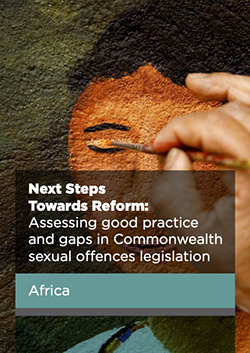
This report examines the status of sexual offences legislation in Commonwealth Africa, assessing good practice and identifying where there are gaps in protection, with a particular focus on women, children, LGBT+ people and people with disability.
Clear global trend in favour of human rights of LGBT people, says HDT

The Trust will provide technical legal & communications assistance to Commonwealth governments
Join our newsletter to receive regular updates about decriminalisation efforts around the world, including breaking news on key legal cases, hot off the press reports, invitations to events and messages from our Chief Executive.