
Turkmenistan
Turkmenistan criminalises same-sex sexual activity between men. Sentences include a maximum penalty of two years’ imprisonment.
Last updated: 6 January 2026
Same-sex sexual activity is prohibited under the Criminal Code 1994, which criminalises ‘voluntary sexual intercourse of two male individuals’. This provision carries a maximum penalty of three years’ imprisonment. Only men are criminalised under this law. Transgender people may also be targeted under the law.
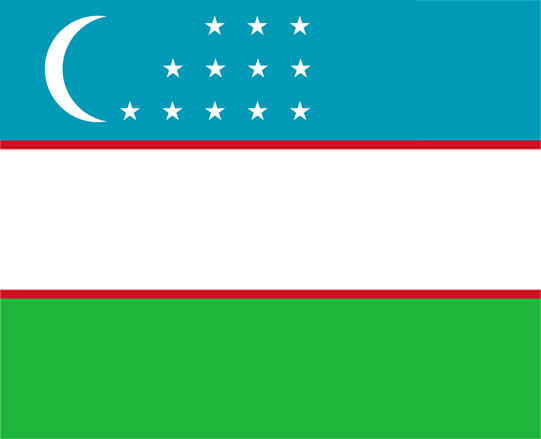
A former Soviet Union state, Uzbekistan gained its independence in 1991. Although Russia and most former Soviet states opted not to criminalise same-sex sexual activity in their new criminal law regimes of the 1990s, Uzbekistan was one of two which chose to continue criminalising after the Soviet Union dissolved (the other being Turkmenistan).
There is substantial evidence of the law being enforced in recent years, with LGBT people being frequently subject to arrest, as well as extortion by threat of arrest. There have been consistent reports of discrimination and violence being committed against LGBT people in recent years, including murder, assault, harassment, and the denial of basic rights and services.
Amnesty International reported that the government continued to resist calls to decriminalise same-sex activity, responding to the UN Committee on Economic, Social and Cultural Rights in April that same-sex relations contradicted “the traditions of the multi-ethnic people of Uzbekistan, the values of the institution of the family and national customs.”
ILGA Europe reported that a proposal was introduced to ban communications via mass media for the purposes of “propaganda of unnatural relations between same-sex persons”, however as of 2023 it had not been adopted.
In September, Human Rights Watch reported that a new mandatory STI testing law was proposed, which would require testing as part of police raids on venues where “dangerous groups” gathered. The law outlined that these groups included men who have sex with men, along with sex workers and people who use drugs.
In February, Uzbekistan’s Prosecutor General’s Office published a new draft Criminal Code for public discussion. Despite calls to decriminalise from international human rights bodies and civil society, this draft retained the offence currently under Article 120, although it is renumbered to Article 154 under ‘crimes against family, morality, and children’. The Human Dignity Trust issued a statement on this proposal, outlining how the law fails to comply with international human rights standards.
Joint statement from ILGA Europe, HDT and other human rights organisations
TGEU reported that in 2024 there was a relatively high number of prosecutions of trans people, including 14 trans women in Samarkand being held under Article 120.
According to ILGA Europe, during the UPR review in November, Deputy Minister of the Ministry of Internal Affairs, Abdulhakov Yahedjon, stated that 27 people were convicted under Article 120 during 2023.
The US Department of State report cited human rights defenders who claimed that security services used informants to entrap and blackmail men suspected of being gay.
The US Department of State report for 2022 included a case from December 2021 in which a transgender person was sentenced to five years of restricted movement, meaning that she could not go out after dark or leave the region without police permission.
The Ministry of Interior Affairs announced that between 2016 and 2020, 44 people had been prosecuted under Article 120, with 49 serving prison sentences at the time of the announcement.
In November, the media reported that authorities arrested an assistant to the Chair of the Supreme Court for “homosexual relations”. The reports suggested that the person had been extorted for money by his long-term partner, who leaked videos of them having sex when he refused to continue paying.
In December, two men were arrested for same-sex sexual activity, and were subject to intrusive medical ‘examinations’ in an effort to ‘prove’ the acts.
Homosexuality is disgusting to Uzbeks.
Outright International reports in its country overview of Uzbekistan that “LGBTIQ issues are taboo and societal opinion of LGBTIQ people is largely negative. Violence, threats of violence, and discrimination against LGBTIQ people occur with impunity. Families often ostracize and abuse their LGBTIQ family members. Some LGBTIQ people are forced into ‘corrective’ treatments which attempt to change their gender identity and/or sexual orientation.”
The US Department of State report documented significant societal discrimination, with perpetrators acting with impunity, including ‘corrective therapy’, sexual abuse, and forced anal exams.
According to ILGA Europe, those arrested under Article 120 are subject to violations of their human rights in detention, such as: “torture, including solitary confinement, forced anal examination, electric shock, rape, beating, forced HIV testing, extortion, blackmail, theft of personal property and money, humiliation, verbal abuse, and inhumane conditions.” Furthermore, those serving a sentence who were living with HIV were denied palliative care for end-stage AIDS.
The UK Foreign, Commonwealth & Development Office Human Rights and Democracy Report states that there were many cases of human rights violations against LGBT people in Uzbekistan in 2022, characterised by extortion and violence. Forced anal examinations remained widespread despite condemnation from WHO and UNAIDS.
ECOM’s annual report on LGBT rights violations for 2022 found 80 cases of violations against LGBT people, most commonly against men who have sex with men, and most commonly perpetrated by police, relatives, and neighbours.
In March, an Uzbek human rights activist and pro-democracy campaigner was hospitalised following a severe assault by a group of men. The attack is thought to be linked to his support for the decriminalisation of same-sex sexual activity. The assault followed a public event hosted by the victim, which had been disrupted by dozens of aggressive men. In April it was reported that he had been placed under house arrest following his release from hospital, having been charged with offences of libel and public insult. He was sentenced to three years’ restricted freedom in January 2022.
A report released by Human Rights Watch in March documented the treatment of gay men in Uzbekistan. It stated that they faced arbitrary detention, prosecution, homophobia, threats, attacks, and extortion.
Also in April, a journalist was threatened for reporting on the attack which the Ministry of Interior Affairs claimed violated the country’s media laws.
In August, it was reported that authorities had subjected at least six men to forced anal ‘examinations’ between 2017 and 2021.
In September, a man was found dead just days after revealing that he was gay on social media. He suffered several knife wounds in his neck and arms. Two people were charged with murder.
In September, it was reported that a group of men stripped, beat, and abused a person they suspected of being gay. A video of the incident was published on social media. The group were all arrested and detained by police.
Turkmenistan criminalises same-sex sexual activity between men. Sentences include a maximum penalty of two years’ imprisonment.
Afghanistan criminalises same-sex sexual activity between men and between women. Sentences include a maximum penalty of death.
Iran criminalises same-sex sexual activity between men and between women. Sentences include a maximum penalty of death.
The country profiles on the Human Dignity Trust’s website are developed through a combination of in-house expertise and research, including monitoring media reports; sourcing reports from partners and stakeholders; and reviewing reports from governments and other human rights organisations.
We go to great lengths to ensure that, to the best of our knowledge, the information provided on our website is correct and up to date. If you believe that any information on our website is inaccurate, you may bring this to our attention by e-mailing [email protected].
Information on this website is provided for general use only and should not be relied on as a definitive position on the law as it applies at any given time. No liability can be accepted for any use of the information in this website and/or links from it.
Over 60 countries still criminalise LGBT people. Together, we can bring this number down. A donation today will help continue our vital support for LGBT people and governments seeking to change laws around the world.
Donate
This report examines the status of sexual offences legislation in Commonwealth Asia, assessing good practice and identifying where there are gaps in protection, with a particular focus on women, children, LGBT+ people and people with disability.
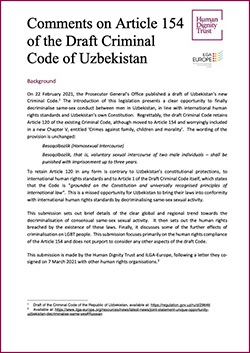
This briefing note sets out the clear opportunity presented by the reform to Uzbekistan's criminal code to decriminalise same-sex conduct between men in Uzbekistan, in line with international human rights standards and Uzbekistan’s own Constitution.
Human Dignity Trust joins eight other human rights organisations to urge President Shavkat Mirziyoyev to issue an immediate ban on forced medical examinations.
Join our newsletter to receive regular updates about decriminalisation efforts around the world, including breaking news on key legal cases, hot off the press reports, invitations to events and messages from our Chief Executive.