
Sudan
Sudan criminalises same-sex sexual activity between men and between women. Sentences include a maximum penalty of life imprisonment.
Last updated: 26 November 2025
Same-sex sexual activity is prohibited under the Penal Code 2017, which criminalises ‘sexual relations with a person of the same sex’. This provision carries a maximum penalty of two years’ imprisonment and a fine. Both men and women are criminalised under this law.
Chad criminalised same-sex sexual activity for the first time with the passage of the revised Penal Code in 2017.
There is some limited evidence of the law being enforced, with a few reports in recent years. There are limited reports of discrimination and violence being committed against LGBT people in recent years, however this is possibly due to the lack of information available.
In August Chad’s new Penal Code came into effect, criminalising same-sex intimacy between men and between women for the first time.
In September, the Council of Ministers approved a draft revised penal code for debate in the National Assembly. One of the amendments proposed to criminalise same-sex sexual activity with a punishment of 15-20 years’ imprisonment and a fine of between 50,000 and 500,000 CFA francs. This development received international media attention, prompting concern from human rights organisations. The government subsequently withdrew the draft penal code from National Assembly consideration for further review.
The US Department of State cited reports from local civil society saying that several dozen individuals were imprisoned on the basis of their sexual orientation or gender identity but held under the pretext of other charges.
A news article reported on a man who fled Chad after being arrested under the homosexuality law in September 2022. He was sentenced to 12 months’ imprisonment and released in February 2023, after which he fled to South Africa and claimed asylum.
ILGA World reported an incident in July in which a person was arrested for being a “man dressed as a woman”. A police spokesperson referred to the arrested person as a ‘homosexual’ and indicated that they had identified them on the basis of their dress, suggesting a conflation between sexual orientation and gender identity. It is not clear whether the person was prosecuted for any offence.
The US Department of State report for 2019 cited a local LGBT advocacy group which reported that 22 men were arrested in Moussoro for same-sex sexual activity. It is not clear whether this was one incident or several, or whether the arrests resulted in prosecutions.
Despite same-sex sexual activity not formally being criminalised until the passage of the 2017 Penal Code, two gay men were arrested in Abéché in 2013 allegedly for celebrating their wedding in a bar. They were charged with indecent exposure and were issued with a fine and a two-year suspended sentence. It was further ordered that the bar be closed for two years. This prompted religious groups, youth associations and women’s groups to petition the government to punish the couple for what they described as a “vile and anti-religious act”. One of the men reportedly left the country after he was released.
“Homosexuality is condemned by all religions. We do not have to forgive something that God himself rejects, because Westerners have said this.”
Freedom House’s Freedom in the World report noted that LGBT people are forced to conceal their identities due to widespread cultural discrimination, and have little opportunity to engage in political processes or advocate for their interests due to severe marginalisation.
At the Universal Periodic Review in April, Chad stated that it considered homosexuality to be contrary to its customs and practices.
The US Department of State report found that LGBT people faced verbal and physical aggression, and few lived openly as a result. LGBT people reported police harassment, arbitrary detention, threats, and bribery. Police refused to investigate or prosecute crimes against LGBT people. Difficulties in obtaining housing, employment, and access to government services were reported, while expression, association, and assembly were de facto restricted.
The US Department of State report noted that there were no LGBT organisations in the country.
Sudan criminalises same-sex sexual activity between men and between women. Sentences include a maximum penalty of life imprisonment.
Libya criminalises same-sex sexual activity between men and between women. Sentences include a maximum penalty of five years’ imprisonment.
Cameroon criminalises same-sex sexual activity between men and between women. Sentences include a maximum penalty of five years’ imprisonment and a fine.
The country profiles on the Human Dignity Trust’s website are developed through a combination of in-house expertise and research, including monitoring media reports; sourcing reports from partners and stakeholders; and reviewing reports from governments and other human rights organisations.
We go to great lengths to ensure that, to the best of our knowledge, the information provided on our website is correct and up to date. If you believe that any information on our website is inaccurate, you may bring this to our attention by e-mailing [email protected].
Information on this website is provided for general use only and should not be relied on as a definitive position on the law as it applies at any given time. No liability can be accepted for any use of the information in this website and/or links from it.
Over 60 countries still criminalise LGBT people. Together, we can bring this number down. A donation today will help continue our vital support for LGBT people and governments seeking to change laws around the world.
Donate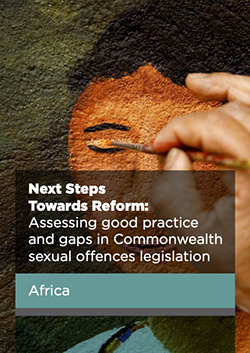
This report examines the status of sexual offences legislation in Commonwealth Africa, assessing good practice and identifying where there are gaps in protection, with a particular focus on women, children, LGBT+ people and people with disability.
Clear global trend in favour of human rights of LGBT people, says HDT
To mark LGBT History Month 2022, the Trust' new timeline chronicles the evolution of the criminalisation (and decriminalisation) of same-sex activity.
Join our newsletter to receive regular updates about decriminalisation efforts around the world, including breaking news on key legal cases, hot off the press reports, invitations to events and messages from our Chief Executive.