
Libya
Libya criminalises same-sex sexual activity between men and between women. Sentences include a maximum penalty of five years’ imprisonment.
Last updated: 26 June 2026
Same-sex sexual activity is prohibited under the Penal Code 1937 and Law 10/1961, which criminalises acts of ‘indecency’, ‘scandalous acts’, and ‘debauchery’. These provisions carry a maximum penalty of three years’ imprisonment and a fine. The local advocacy group Bedayaa reports that, in reality, some are convicted to up to six years in prison. Only men are criminalised under this law.
These laws do not explicitly criminalise same-sex sexual activity but have been enforced, to varying degrees, against the LGBT community in recent decades. The provisions are of colonial origin, and their vagueness has allowed them to be applied to same-sex sexual activity over time.
There is substantial evidence of the law being enforced in recent years, with LGBT people being frequently subject to arrest, especially since 2013 following an incident in which a pride flag was raised at a concert (see below). Police use a number of methods to arrest gay men, including using dating apps and social media to entrap them. Although arrests frequently result in conviction, reports suggest a high proportion are acquitted on appeal.
There have been consistent reports of discrimination and violence being committed against LGBT people in Egypt, including abuse, harassment, forced anal examinations, and the forced payment of bribes.
In January it was reported that the Economic Court in Alexandria explicitly interpreted Article 25 of the Cybercrime law as criminalizing homosexuality. Article 25, which relates to violations of “family principles or values”, had been criticised for being vague and open to abuse. The Economic Court concluded that any charge of “debauchery” under Article 25 transformed into an explicit charge of homosexuality.
It is reported that in September, the Egyptian Education Ministry issued a directive which included promoting anti-LGBT awareness campaigns in schools to allegedly protect children from “deviant” sexual behaviours. The Supreme Council for Media Regulation also issued a demand in September that Netflix remove “offensive content” and that companies adhere to the country’s “societal values”, largely seen as a demand to remove LGBT+ content from streaming platforms.
According to ILGA World, a draft bill was introduced to the Parliament’s Legislative and Constitutional Committee to replace Law No. 10/1961 on combating prostitution and debauchery, the law used to criminalise LGBT people in Egypt. Article 14 of the Bill would introduce a penalty of up to seven years in prison for “direct or indirect invitations” to practice debauchery (including same-sex sexual relations) and prostitution on social media and digital spaces.
Egypt’s Supreme Council for Media Regulation issued an order to ban all forms of promotion or sympathy towards the LGBT community on media outlets, as well as the appearance of LGBT people on media outlets.
The Supreme Administrative Court ruled in favour of the Ministry of Interior in a case filed by a Libyan citizen to overturn the decision barring him from entering the country. This ruling gave the Ministry the power to deport individuals based on their sexual orientation and practices without being required to prove their guilt in court first. The verdict, issued by the Supreme Administrative Court, went against the recommendation issued by the Court’s Commissioners’ Authority.
The US Department of State reported that authorities charged more than 50 people in at least eight cases under the debauchery law during the year. A case in December involved charges for “incitement to lure males with the intention to commit immoral acts” and “assaulting family principles and values”. This report also alleges police harassment, entrapment through dating apps, forced anal exams, and extortion of bribes and information about other LGBT people to avoid arrest. ILGA World’s Identities Under Arrest report documented more than 75 examples of de facto enforcement, excluding those targeted in crackdowns and raids. A recent case in January 2023 led to a man jumping off a balcony to his death to avoid arrest.
In February, Human Rights Watch released a report on digital targeting of LGBT people which documented 29 cases of arrest and prosecution of Egypt. Those arrested reported numerous rights violations, including the denial of food and water, family and legal representation, and medical services as well as verbal, physical, and sexual assault. Transgender people are held in jails which don’t conform to their gender identity.
The US Department of State, citing a local rights group, reported over 250 arrests of LGBT persons since 2013.
A report from NGO ARTICLE 19 shows that Egyptian authorities increasingly use technological means to target and prosecute individuals perceived as LGBT, using digital evidence in trials.
LGBT organisation Bedayaa’s Legal Aid Project documented 65 cases of enforcement involving 92 LGBT people in 2019 (76 in 2018) noting that most of these arrests took place “randomly off the street”, though some also came through entrapment on dating apps, and in hotel/house arrests. Fifty cases resulted in convictions at first instance, however 42 resulted in acquittal on appeal.
Bedayaa documented 71 cases of enforcement involving 76 people in 2018.
The US Department of State Human Rights report stated that there was an increase in arrests and harassment of LGBT individuals, particularly after a rainbow flag was raised on September 22 at a concert by the rock band Mashrou Leila (see below). Reports after this incident suggested that more than 85 individuals were arrested in a massive crackdown.
The Human Rights Watch World report stated that a local advocacy group, Solidarity with Egypt LGBTQ+, had recorded 114 criminal investigations involving 274 LGBT individuals launched between the end of 2013 and November 2016, 66 of which involved the authorities’ use of social media.
One blog post, citing Egyptian activists (Egyptian Initiative for Personal Rights) as a source, claimed in May that 77 LGBT individuals had been arrested since October 2013.
In September, an Afghani news source, Khaama Press, reported the arrest of seven Egyptian men after they appeared in a video showing the marriage of two gay men. “Medical tests” were ordered for those individuals arrested. The report also alleges that four men were sentenced to eight years imprisonment for debauchery in April, after being found guilty of attending parties, where “homosexual activity” was alleged to have occurred.
In December, 26 men were arrested in a bathhouse in downtown Cairo’s Ramses area at the behest of television host Mona al-Iraqi, who filmed the ensuing security raid. In January 2015, the Azbakeya Misdemeanors Court acquitted them.
[The actions of homosexuals] are humiliating, regrettable and would anger God.
In October, 14 suspects were allegedly detained for investigation into allegations that they had committed “homosexual acts” at an Egyptian medical centre.
Outright International’s country overview reports that societal attitudes towards LGBT people are “highly conservative, with widespread public disapproval reinforced by government policies”. Anti-LGBT sentiment is prevalent in educational settings.
The US Department of State report found incidents of domestic and street violence against LGBT people, including extortion attempts. Discrimination was reported to be widespread, and there were no attempts by police to tackle it.
The US Department of State report for 2019 highlighted that “intimidation and the risk of arrest greatly restricted open reporting [of discrimination and harassment] and contributed to self-censorship”.
In September, a Lebanese band, Mashrou Leila, played a concert to an audience of 30,000 in Cairo, led by openly-gay singer Hamed Sinno. Fans waved rainbow flags in support of LGBT rights, leading to a media outcry against homosexuality and perceived ‘immorality’ and to a mass arrest of LGBT individuals.
In October, Egypt’s Supreme State Security Prosecution ordered two activists, Sarah Hegazy and Ahmed Alaa, to be detained for 15 days pending investigation for allegedly joining a banned group aimed at interfering with the constitution. After three months in pre-trial detention, they were released on bail and left the country.
Reports suggest that Egyptian police had begun to use social media websites to identify and target gay men. The local LGBT community issued warnings to avoid using dating apps following rumours that officials were using them to arrest gay men.
Libya criminalises same-sex sexual activity between men and between women. Sentences include a maximum penalty of five years’ imprisonment.
Syria criminalises same-sex sexual activity between men and between women. Sentences include a maximum penalty of three years’ imprisonment.
Sudan criminalises same-sex sexual activity between men and between women. Sentences include a maximum penalty of life imprisonment.
The country profiles on the Human Dignity Trust’s website are developed through a combination of in-house expertise and research, including monitoring media reports; sourcing reports from partners and stakeholders; and reviewing reports from governments and other human rights organisations.
We go to great lengths to ensure that, to the best of our knowledge, the information provided on our website is correct and up to date. If you believe that any information on our website is inaccurate, you may bring this to our attention by e-mailing [email protected].
Information on this website is provided for general use only and should not be relied on as a definitive position on the law as it applies at any given time. No liability can be accepted for any use of the information in this website and/or links from it.
an organisation which works to promote the rights of LGBT people in Egypt and Sudan.
a general human rights organisation based in Egypt which has done work supporting LGBT rights.
an organisation working to reduce security risk and social obstacles for LGBT people in Egypt and Sudan.
a research body that advocates and advances sexual and bodily freedoms, particularly for the marginalised and stigmatised segments of gender and sexual minorities, encompassing individuals who identify as LGBTQ+, those living with HIV, sex workers, and women.
Over 60 countries still criminalise LGBT people. Together, we can bring this number down. A donation today will help continue our vital support for LGBT people and governments seeking to change laws around the world.
Donate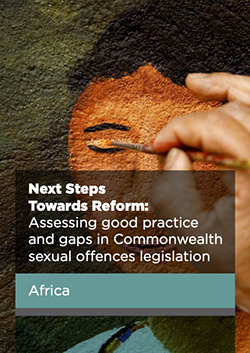
This report examines the status of sexual offences legislation in Commonwealth Africa, assessing good practice and identifying where there are gaps in protection, with a particular focus on women, children, LGBT+ people and people with disability.
Peak medical body in Tunisia calls for doctors to cease conducting degrading, discriminatory, and unscientific “testing” for evidence of homosexual conduct.
To mark LGBT History Month 2022, the Trust' new timeline chronicles the evolution of the criminalisation (and decriminalisation) of same-sex activity.
Join our newsletter to receive regular updates about decriminalisation efforts around the world, including breaking news on key legal cases, hot off the press reports, invitations to events and messages from our Chief Executive.